Who is Te Ipukarea Society?
 Te Ipukarea Society (TIS) is a small but effective membership-based non-government organisation (NGO) that has been in existence since 1996. Over this period, we have grown our reputation for completing environmental projects and being a credible source of independent, research-based evidence, information and expertise on environmental issues impacting the Cook Islands.
While we advocate, promote and educate to ensure environmental sustainability and undertake projects to conserve, restore and protect our natural capital, we are clear we are not a regulator. This is the role of the National Environment Service (NES), Ministry of Health (MoH) and Infrastructure Cook Islands (ICI) and other Government institutions.
Our dynamic staff and supportive volunteers, are multi-skilled and highly experienced and are known by others to “be the people who do the work”, producing substantial and valued outputs. We are seen to “walk the talk” and to be “value for money” by funders. While individual and family membership is relatively small, corporate membership is strong and effective.
History
TIS was the first Cook Islands environmental NGO established in 1996 as a direct result of the downsizing of the Environment Service. TIS was formed by a group of citizens who felt some of the projects axed were worthwhile continuing for the benefit of the Cook Islands. Since then the National Environment Service has strengthened and TIS works closely with them where NGO involvement is needed. This may be in a supportive role or through campaigns that raise awareness on specific topics that affect our country.
Our Philosophy
We do not own our land and marine resources but borrow them from our children and need to return them in good condition. We desire a healthy and beautiful environment.
Our Mission
Promote ecological balance and harmony in the relationship between Cook Islands people and the natural world around us.
Our Objectives
- To disseminate information and raise awareness amongst members and the community regarding environmental issues.
- Promote conservation and sustainable development by demonstrating sound practices through carefully selected field projects that draw on traditional knowledge and methods.
- To collaborate with organisations both local and throughout the world to advance the course of conservation and sustainable development.
How we operate
Te Ipukarea Society is managed by a voluntary executive committee, elected annually by members at our Annual General Meeting (AGM) as per our constitution. A small core of paid staff, supported by volunteers, attend to the day‐to‐day running of the Society. Our staff and membership include well-respected scientists and active campaigners for environmental sustainability.
We are members of IUCN and BirdLife International.
What does TIS do?
Te Ipukarea Society encourages innovative, proactive and positive outcomes to environmental problems, by working with individuals, schools, community organisations, private sector and government.
- We provide leadership on key environmental issues and a voice for our community.
- We plan and implement projects that will bring positive environmental outcomes to our Nation. We must understand where development stops and destruction starts.
- We believe individuals must avoid actions that negatively impact our natural environment and potentially humanity, both now and in the future.
We coordinate important local and nation‐wide campaigns on a broad range of environmental issues in the Cook Islands.
We are guided by our strategic plan and focus our projects in five main areas:
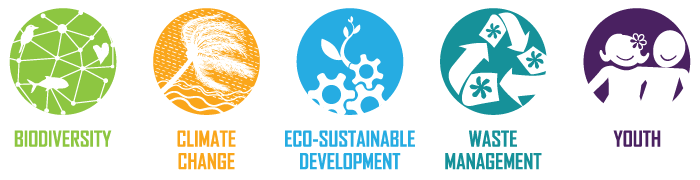
Biodiversity
For example: Invasive species, predator control and rat eradication, seabird monitoring, and advocating conservation efforts for both terrestrial and marine ecosystems.
Climate Change
For example: Coastal protection, promoting nature-based and hybrid solutions, geo-textile sandbags, and the planting of native coastal trees along vulnerable coastlines.
Eco-Sustainable Development
For example: Raising awareness on the environmental impacts of deep seabed mining, overfishing from industrial fishing, advising on Environmental Impact Assessments (EIAs) which threaten wetlands and coastal areas, and promoting a regenerative tourism industry.
Waste Management
For example: Promoting positive behavioral change among local communities to minimise waste from single-use plastics, repurposing organic waste through composting, and educating on and promoting reusable menstrual products.
Youth
For example: School presentations on various environmental issues, youth science camps, internship opportunities to work at TIS through the Dame Margaret Karika Award, and we host a stand/exhibit at the annual Careers Expo.