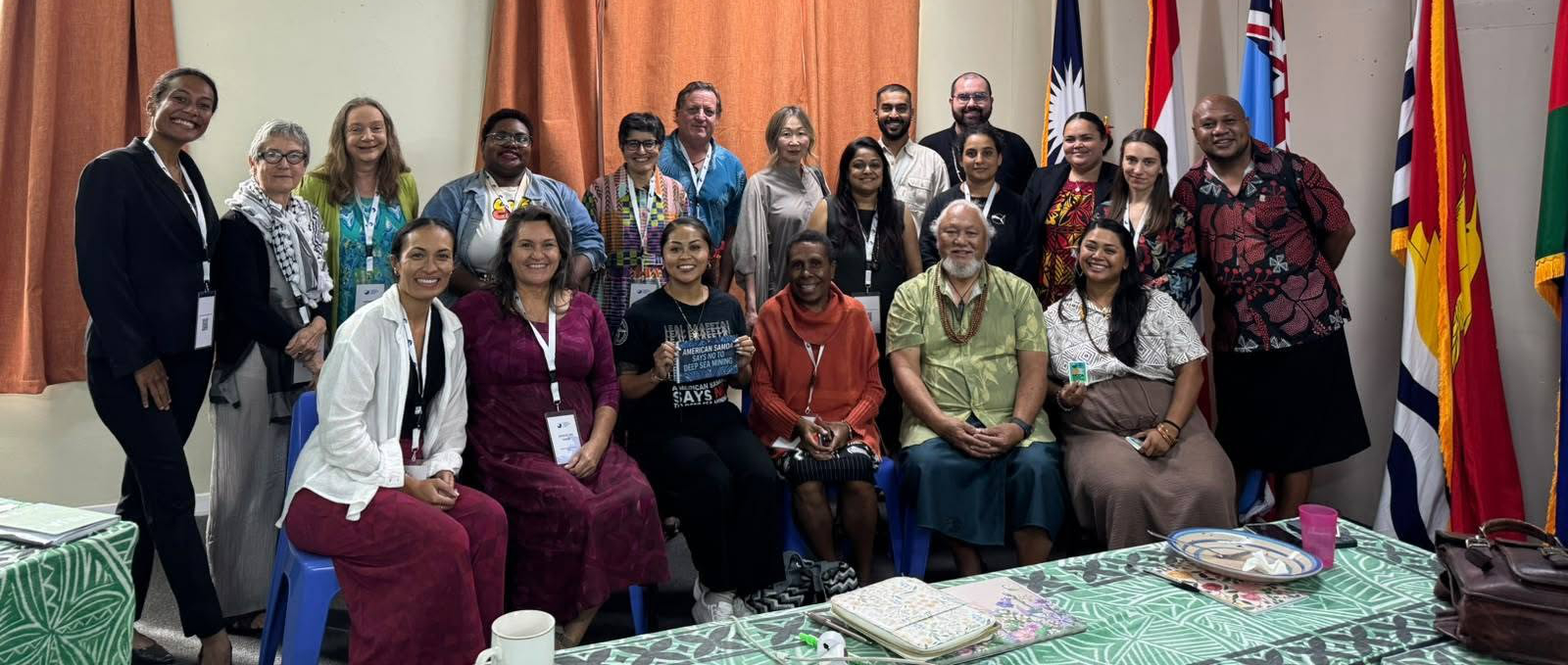
Te Ipukarea Society (TIS) was proud to be asked to attend the inaugural State of the Pacific Ocean Convening held in Suva, Fiji, from 8–11 June 2026. We were joined by Pacific leaders, indigenous practitioners, academics, legal experts, faith leaders and other civil society organisations, all gathered to reflect on the health and future of the Blue Pacific. The convening, held at Pasifika Communities University and timed to coincide with World Oceans Day, focused on strengthening regional solidarity, indigenous knowledge, and collective action for ocean stewardship.
The gathering opened with a powerful call to “let an old story die so a truer story can live,” urging Pacific peoples to reject extractive thinking that treats the ocean as a resource to be exploited, and instead re-centre relationships, responsibility and belonging. Over the four days, participants discussed the mounting pressures facing the Pacific Ocean, including climate change, biodiversity loss, pollution, ocean governance, and the urgent need for coordinated advocacy rooted in Pacific values and customary knowledge.
Representing TIS, Sieni Tiraa joined like-minded people from across the region working to protect and conserve the deep ocean. The convening was made even more significant by the presence of prominent Pacific leaders and advocates such as Dame Meg Taylor, Honourable Ralph Regenvanu of Vanuatu, and Governor Garry Juffa of Papua New Guinea. Their attendance brought weight, credibility and a strong sense of regional solidarity to the gathering, reflecting that concerns about ocean protection, deep seabed mining, and Pacific sovereignty are being taken seriously not only by civil society, but also by influential figures with long-standing commitments to environmental justice and Pacific self-determination. For TIS, this reinforced the value of participating in a space where Cook Islands civil society voices could stand alongside respected regional leadership in shaping critical conversations on ocean protection and the future of Marae Moana.
A major concern throughout these discussions was the growing push for deep seabed mining, which poses profound risks and potentially irreversible impacts to deep-ocean ecosystems and the wider Pacific marine environment. Across the region, civil society organisations have warned that deep seabed mining is being falsely framed as “sustainable blue growth,” despite the scientific uncertainty surrounding its impacts on biodiversity, fisheries, ecological integrity and ocean health.
Speakers at the meeting highlighted that deep seabed mining is not just an environmental risk, it is becoming part of bigger political and security tensions in the Pacific. The push for seabed minerals is being driven not only by business interests, but also by the global race for strategic resources linked to national security and military supply chains. For the Cook Islands, this means deep seabed mining is not just about minerals — it could also draw Marae Moana into bigger power struggles between countries. Speakers at the Suva gathering warned that growing militarisation, outside influence, and great power competition are already putting pressure on Pacific unity and regional priorities.
These threats sit in direct opposition to the vision set out in the 2050 Strategy for the Blue Pacific Continent. That Strategy commits Pacific leaders to a region of peace, harmony, security, inclusion and prosperity, grounded in ocean health, traditional knowledge, collective stewardship and strong regional cooperation. The Strategy itself recognises that heightened geopolitical competition and increasing commercial and state-sponsored interest in Pacific resources threaten the region’s long-term wellbeing. Deep seabed mining risks undermining precisely the peace, security, environmental integrity and sovereignty that the 2050 Strategy seeks to protect.
Sieni said the convening offered both reassurance and renewed resolve: “It was an insightful and deeply informative meeting, and it was encouraging to be among like-minded people representing a different organisations from across the Pacific who are standing up to protect and conserve the deep ocean. It was especially reassuring to know there is strong regional support out there for communities working to defend our moana from the considerable destructive risks associated with industries like deep seabed mining.”
What happens in Marae Moana will echo across the Pacific. In the face of deep seabed mining, leaders now stand at a crossroads: to defend the integrity of our ocean and the vision of the Blue Pacific, or to open the door to risks and impacts that future generations may not be able to reverse.