
In a recent Time Magazine article, explorer and investor Victor Vescovo asserts that the economics of deep-seabed mining simply “do not stack up”. This strong claim prompts critical questions about the substantial investments being made by mining companies in deep sea mining exploration, including the three companies actively exploring the deep seabed in the Cook Islands. It also encourages some critical thinking on why we have increasing interest from China in our mineral resources.
Vescovo’s analysis highlights several critical flaws in the deep-seabed mining proposition:
- Battery Technology Development: The initial justification for deep-seabed mining centred on providing crucial metals for Electric Vehicle (EV) batteries. However, this justification is rapidly becoming obsolete. Battery technology has significantly advanced, with new chemistries utilising cheaper, more abundant materials such as iron, phosphorus, and sodium. However, the demand for cobalt and nickel, remains, as it is also used to fuel military endeavours such as weapons and warcraft like fighter jets. This new deep sea mining industry could in fact be supporting war around the world.
- Misguided “Critical Metals” Argument: In light of these battery technology shifts, companies like The Metals Company (TMC), a leader in deep-sea mining, and others such as Impossible Metals, have strategically pivoted their marketing. They now emphasise securing “critical metals” for the United States in the global mineral competition, particularly with China. However, China’s current dominance in critical metals stems primarily from its sophisticated processing capabilities of raw materials imported from other countries, not from extensive domestic mining. Vescovo argues that a more effective and less disruptive strategy for the US would be to focus on streamlining domestic or allied processing facilities, mirroring China’s successful import-and-process model. Even if TMC were to achieve its stated production goals, its output of nickel and cobalt would represent a mere 3% of projected global supply, rendering its contribution to the overall supply chain security minimal.
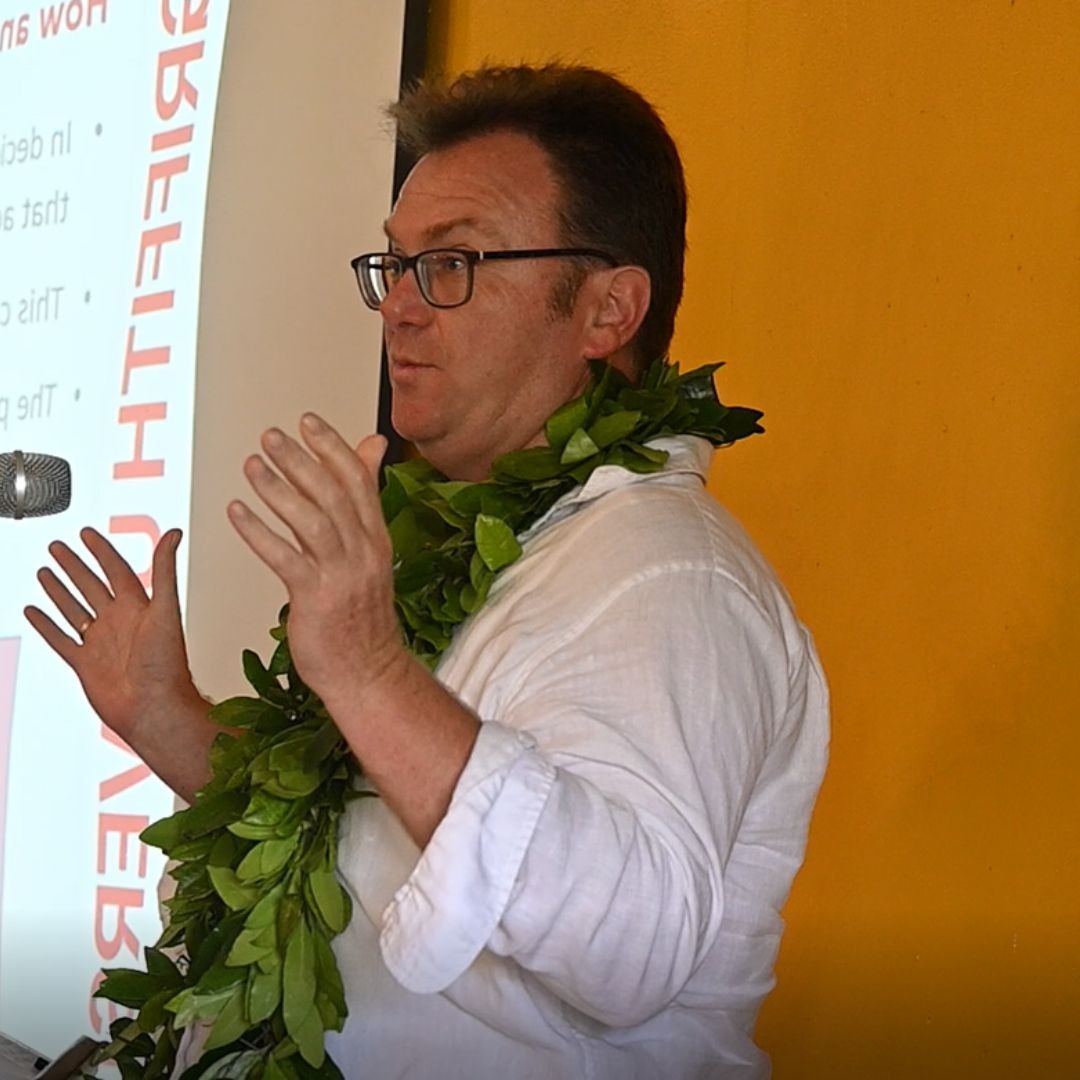
- Unrealistic Cost Projections: TMC’s publicly filed cost projections from 2021, which estimate nearly $38 billion through 2046, appear to disregard significant economic shifts. These projections show no public adjustments despite the highest inflation rates since the 1980s and a more than doubling of operational costs, such as offshore drill ship rates. This suggests a disconnect between their financial forecasting and current economic realities. Dr Chris Fleming, an economist from Grifith University in Queensland, Australia who spoke at the Deep Ocean Symposium in Rarotonga last year, also cast doubts on the economic viabilty of deep seabed mining.
- Environmental Misrepresentation: Proponents of deep-sea mining often claim it’s environmentally preferable to terrestrial mining. However, Vescovo debunks this “false equivalence”. Terrestrial mines, including those in non-rainforest regions like Australia and Canada, yield considerably more metal per hectare (500 to 2000 times more) due to the presence of thick, denser ore veins. Conversely, the two-dimensional nature of seafloor nodule deposits means a vastly larger area would need to be disturbed for the same yield. Furthermore, much of the deep ocean remains unexplored, meaning the full extent of potential ecological harm to these unique ecosystems is not yet understood.
- Legal and Operational Hurdles: Deep-sea mining in international waters comes under the jurisdiction of the International Seabed Authority, formed under the UN Convention on the Law of the Sea (UNCLOS), which has been ratified by 169 nations. TMC’s strategy of bypassing UNCLOS by seeking support from the United States, a non-ratifying nation, presents a complex legal dilemma. It raises significant questions about whether TMC’s Swiss operational partners, such as Allseas and Glencore, would willingly engage in activities that could be considered violations of international law to which their home country adheres. This could also lead to the internationally recognised status of these mined minerals as “conflict minerals”, potentially hindering their marketability and inviting further geopolitical complications.
The Time article concludes that the US would achieve a more secure and cost-effective critical mineral supply by investing in mining and processing facilities domestically or with allied countries possessing larger metal reserves, such as Canada and Australia. The recent partnership with Ukraine is cited as a prime example of such a strategy, strengthening alliances, avoiding potential international law violations, and circumventing the negative precedent that could encourage other nations to disregard established norms. Supporting deep-seabed mining, an expensive and unproven venture for metals with questionable future demand, is framed as a potentially significant financial misstep..
Given these substantial economic and environmental uncertainties, we must question the wisdom of the Cook Islands prioritising deep-seabed mining initiatives.