
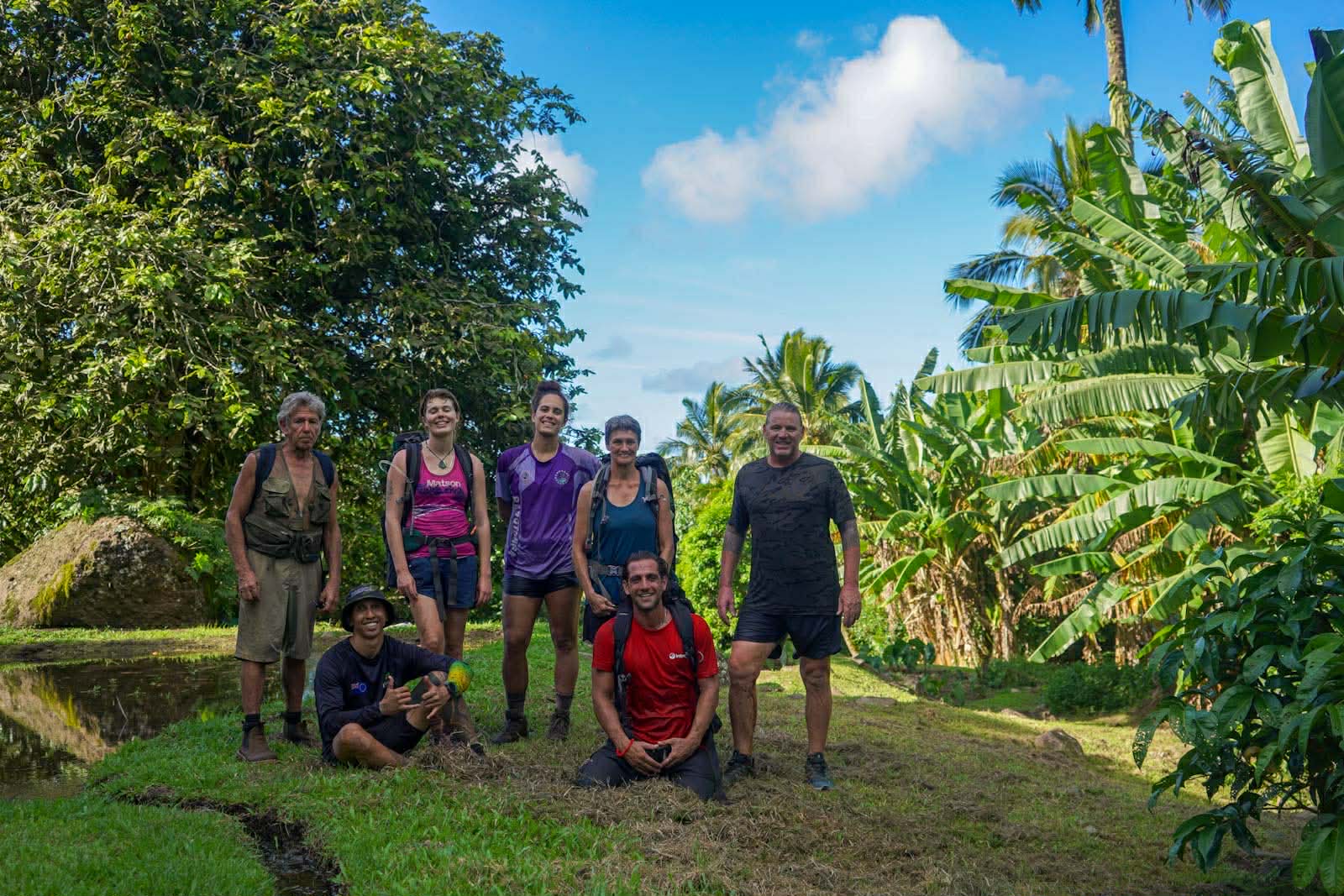
Photo: Conservation field volunteers support predator control efforts within the Takuvaine Valley cloud forest ecosystem. Photo credit Gavin Steiner
Efforts to protect vulnerable seabirds nesting on the ground in the upper high altitude ecosystems of the Takuvaine Valley have received an important boost with the installation of new predator control traps in Rarotonga’s cloud forest ecosystem. Located more than 400 metres above sea level, this unique environment provides important habitat for native and migratory seabirds. However, the presence of introduced predators such as wild cats and rats continues to threaten ground-nesting seabirds and other native wildlife, including endemic skinks and native flora.
In response a New Zealand NGO, Sustainable Waihi Beach, and Air New Zealand have generously donated 10 resetting predator control traps to support conservation efforts in the valley. These traps, known as the AT220 and AT230, are the first of their kind to be used in the Cook Islands, and offer a non toxic predator control option. Designed for use in remote and difficult to reach terrain, the traps are an important tool in ongoing efforts to reduce predator numbers and create safer nesting conditions for ground nesting seabirds like the Tahiti petrel recorded in Takuvaine’s cloud forest.
Unlike traditional single-set traps, the AT220 and AT230 use an automated battery system that allows the trap to reset itself after activation. Each trap can reset up to 100 times before needing to be serviced. This means they can remain active in the field for up to three months at a time, making them particularly well suited for areas such as the upper Takuvaine Valley where access can be challenging. Each trap has been fitted with a ‘Do not tamper’’ warning sign to deter curious hikers from testing the system.
To support the installation of the traps, Pip Coombes from Sustainable Waihi Beach visited Rarotonga to work alongside Te Ipukarea Society and local conservation volunteers. Pip shared valuable knowledge on how to correctly install the resetting traps, select appropriate trap locations, and carry out routine maintenance checks to ensure the traps remain effective over time. The visit also provided an opportunity to learn more about predator control programmes in New Zealand and the positive impact these systems have had in restoring native bird populations.
In Waihi Beach, similar resetting trap networks have played a major role in protecting native wildlife. Through consistent predator control efforts, local monitoring has shown that native bird numbers have rebounded significantly within just five years. These success stories provide encouragement and inspiration for conservation efforts in the Cook Islands, where similar approaches could help support the recovery of threatened native species.
Installing the traps in the steep and forested terrain of Takuvaine Valley required teamwork and determination. A big meitaki maata goes to the dedicated volunteers who helped carry equipment into the valley and set up the traps: Ian Karika, Raniera Ellison, Jacapo Dozzo, Gavin Steiner, Kas Silk, Gemma Langley and Alanna Smith. Their willingness to give their time and energy made the installation possible.
Special thanks also go to Maunga Media for documenting the day and capturing the team’s efforts in action.
Finally, a heartfelt acknowledgement goes to the Takuvaine Management Kumiti for their continued support of biodiversity conservation initiatives in the valley. With strong community support and the introduction of new tools such as the resetting predator traps, there is growing hope that the unique wildlife of the Takuvaine cloud forest will rebound and thrive for generations to come.