
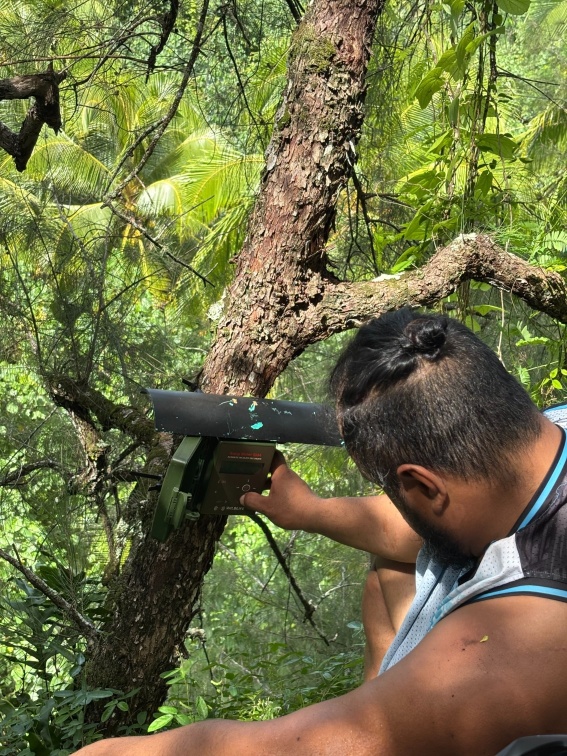
Photo: Song meter within the Mokoero area of Atiu listening out for the unique calls of the petrel and shearwater seabirds coming to land in the dark.
Petrels and shearwaters are seabirds often referred to as “tubenoses,” a name derived from the distinctive tube-shaped nostrils on their beaks that allow them to drain excess salt and detect food across vast distances in the open ocean. Despite their remarkable adaptations, these species remain largely unknown to many communities, as they spend most of their lives at sea and some only return to land under the cover of darkness to nest. They typically nest along cliff edges or on the forest floor, hidden beneath ferns or within burrows under old trees.
As a result, people are far more likely to hear these birds than to see them. Their calls are unique and sometimes give off an eerie sound, where on Atiu for example, one species has long been associated with the sound of a “crying baby” heard in the night. This call has since been identified as belonging to the Tropical Shearwater.
Efforts to better understand which species of petrels and shearwaters still exist across the Cook Islands are currently underway through the ‘Te Manu Tai o te Kūki Āirani’ seabird project, running from 2025 through to the end of 2026. Because most of these birds are nocturnal and nest in remote locations, researchers use song meters placed in the field to record their unique calls during the late evening and early morning hours. Data is analysed every three months, revealing the presence of prehistoric-sounding Tahiti Petrels, the machine gun chattering Herald Petrel, and the distinctive call of the Tropical Shearwater.
As the project approaches one year of monitoring on Rarotonga, surveys have confirmed four species nesting on the island: Tahiti Petrel, Tropical Shearwater, Herald Petrel, and the Collared Petrel. To expand understanding across the pa enua, recent song meter surveys have also been conducted on Atiu and Mangaia. Initial findings indicate the presence of both the Tahiti Petrel and the Titi rakorakoa (Tropical Shearwater) on these islands.
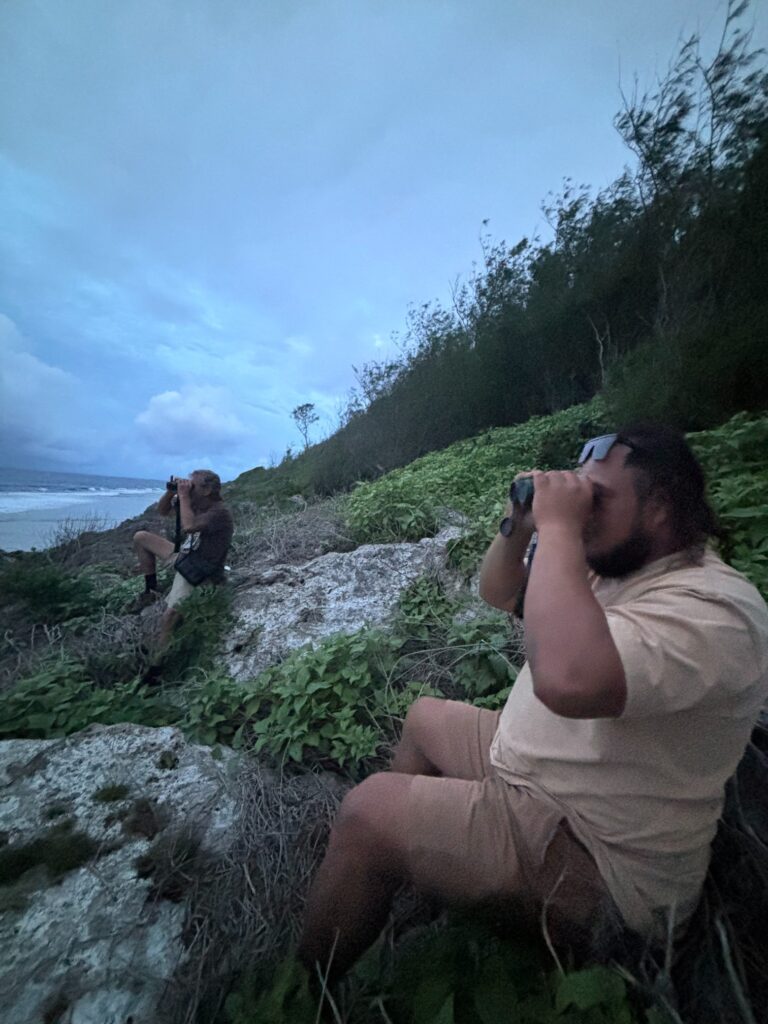
Photo: Night surveys in the late evenings use thermo binoculars to record species of petrels and shearwaters coming to land in the dark.
On Atiu, the Titi rakorakoa can still be heard on the song meters during the late evenings and early mornings, particularly around the area of Mokoero, where they are likely flying past, making their way to nearby breeding sites. Based on the low call rates picked up on the song meters, Titi rakorakoa numbers appear low. As a ground-nesting bird, it faces ongoing challenges, particularly from wild cats and wild pigs, which can disturb and damage nesting habitats within forested areas.
These tubenose seabirds play a vital role in the ecosystem. By transporting nutrients from the ocean back to land through their guano, they help fertilise native forests, especially in hard-to-reach environments. Maintaining these natural processes is essential to preserving healthy, functioning ecosystems that ultimately support human wellbeing. Meitaki maata to the project donor National Fish and Wildlife Foundation and to all project partners involved: Te Ipukarea Society, Archipelago Research and Conservation, National Environment Service, Takuvaine Water Catchment Kumiti, Haura Fishing Charters, Maunga Tours, Island Conservation, BirdLife International, SPREP, and the Atiu Island Council for allowing the recent monitoring survey check on ‘Enuamanu’.
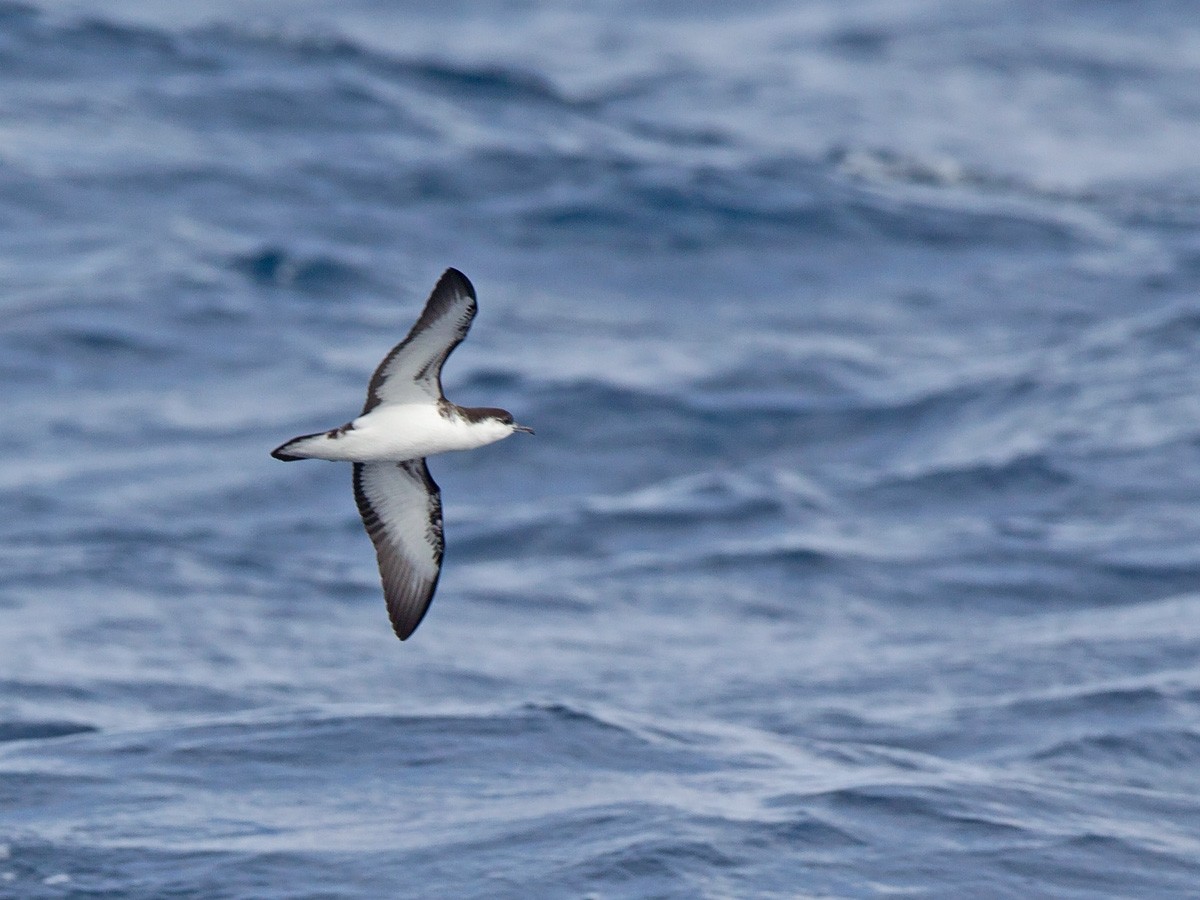
Photo: Tropical shearwater recorded on both Rarotonga and Atiu. On Atiu this species has been long associated with the sound of a crying baby heard in the night. Photo credit e-Bird.