
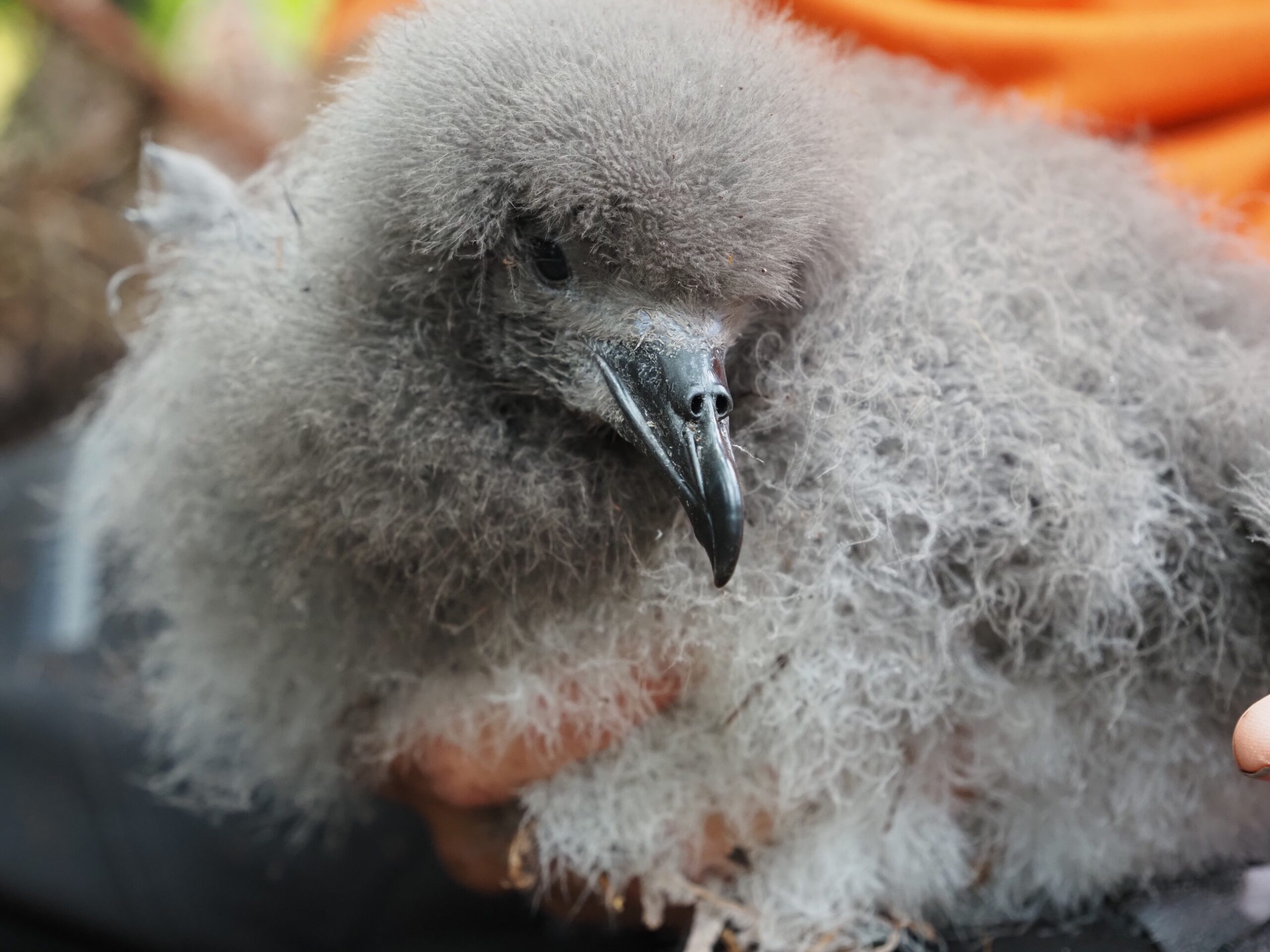
Photo: New tahiti petrel colony found inland Avana (Rarotonga), inspiring the drive to pursue seabird conservation efforts
Seabird conservation efforts across the Cook Islands are continuing to strengthen, with recent fieldwork on Aitutaki and Rarotonga helping improve our understanding of the petrels and shearwater species that inhabit our islands and the threats they face.
In an exciting step forward for seabird monitoring on Aitutaki, the team from Te Ipukarea Society (TIS), alongside GROW Aitutaki and the Archipelago Research and Conservation (ARC), installed the island’s very first song meter.
Song meters are specialised acoustic recording devices that capture bird calls, allowing researchers to identify species that might otherwise go unnoticed. Petrels and shearwaters often return to land during the late evening and throughout the night, making them difficult to observe directly. Recording their calls, through new equipment like song meters, will help build a clearer picture of which species are present on Aitutaki and provide valuable information to guide possible future conservation work.
The team also gained valuable experience in handling grounded petrels and shearwaters which could be found in residential areas. These seabirds can sometimes become disoriented by strong artificial lights, particularly at night, and end up on the ground unable to take off. Knowing how to safely move these grounded seabirds can make a real difference in prolonging the life of these stranded seabirds, by helping them return back to their natural ecosystem.
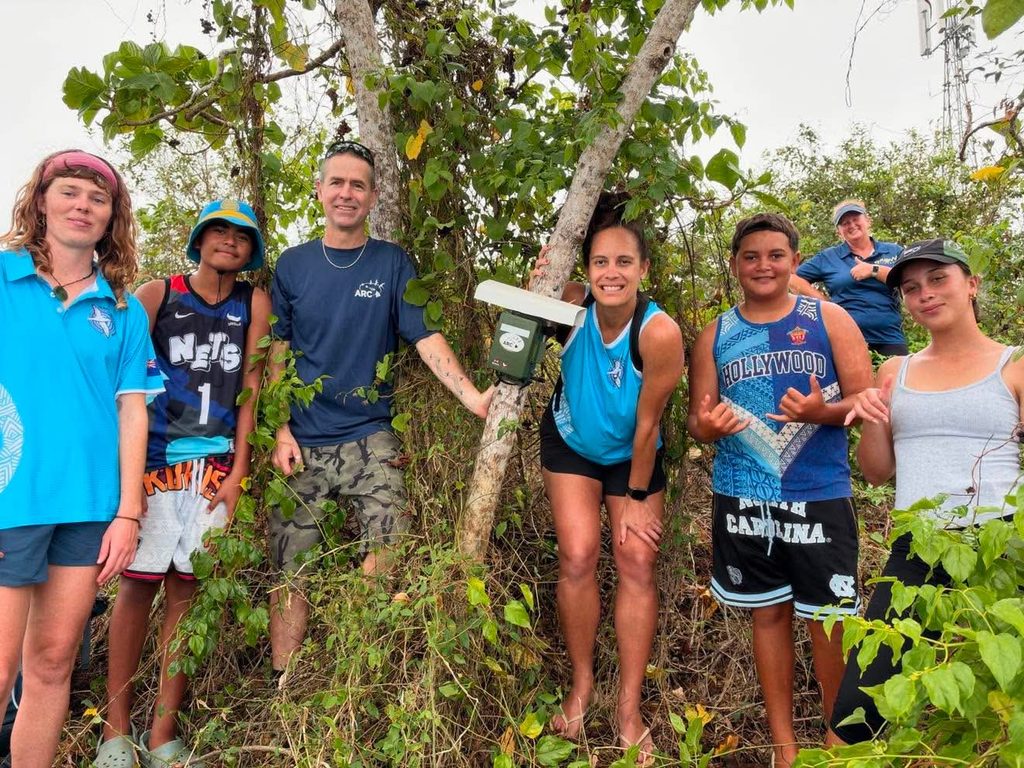
Photo: The team – from installing new monitoring equipment on Aitutaki to protecting nesting colonies on Rarotonga, every recording, observation and conservation action contributes to a better understanding of our seabirds.
Meanwhile, on Rarotonga, seabird conservation efforts continued up within the cloud forest environment, to protect identified nesting petrel and shearwater colonies.
Song meters were serviced to ensure acoustic monitoring could continue, while predator-control traps were checked and reset to help protect ground-nesting seabirds from introduced predators.
Fieldwork also included surveys at sea, where two Tahiti petrels were observed feeding offshore at around 5 pm before presumably returning towards their nesting sites on Rarotonga. These observations offer valuable insight into seabird behaviour and the connection between offshore feeding areas and island nesting habitats.
One of the week’s most exciting moments came when the team located a new Tahiti petrel nesting colony in the Avana area. Discovering a new chick among the nesting birds was a particularly special sight for the team, providing a powerful reminder of why these conservation efforts matter.
However, evidence of these petrel species being predated on by wild cats was also apparent in the same area, highlighting the ongoing threats these vulnerable ground nesting seabird species face. Continued predator control is essential to give these ground nesting seabirds and their chicks the best possible chance of survival.
These achievements reflect the importance of collaboration, local knowledge and practical conservation action. A big meitaki atupaka to the GROW Aitutaki team, Collette, Katiana Meti, Dawson Ruamoana and Anacleto Leone for assisting with the song meter installation and participating in practical seabird conservation training session in Aitutaki. Archipelago Research and Conservation, and BirdLife International Pacific for their additional technical support and assistance, and to the National Fish and Wildlife Foundation for supporting seabird conservation efforts in the Cook Islands.