The Cook Islands is an ocean nation. Our culture, identity, food, and economy are deeply connected to the sea. In light of Deep Day, held recently on the 7th May, we are reminded that life beneath the ocean’s surface, the deep sea, is just as important as the places we see every day, and it needs conserving and protection. Deep Day is an International Day of Awareness dedicated to uniting the world to defend the deep ocean, starting around 200 metres below the surface and comprising most of our planet’s living space.
This vast environment is home to unique and fragile species; stores carbon that helps regulate the climate and supports healthy ocean systems closer to shore. Yet it remains one of the least understood parts of our planet and faces growing threats from activities such as proposed deep-sea mining, overfishing and pollution, pressures that are further intensified by climate change.
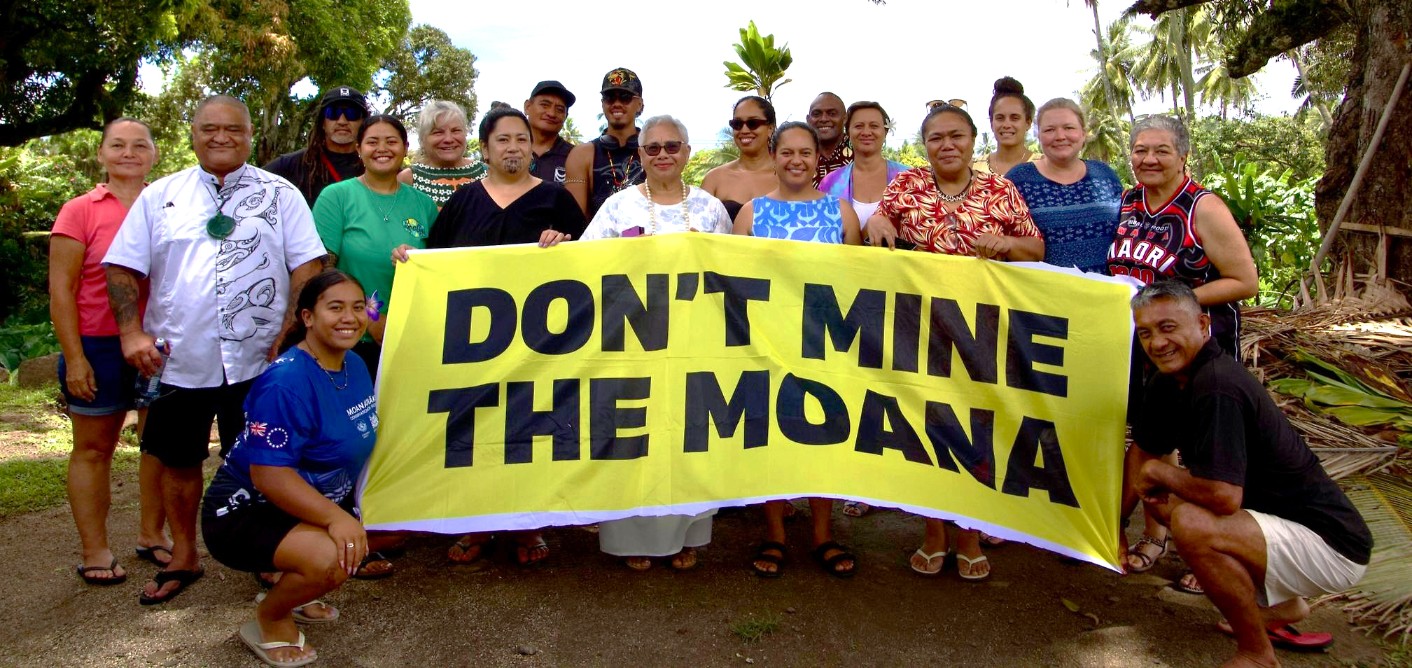
For the Cook Islands, protecting the deep ocean is especially important. Our Exclusive Economic Zone is one of the largest in the world, and decisions made today about the deep sea will shape the future of our marine environment for generations. Damage to deep-sea ecosystems can be irreversible, with recovery taking decades or even centuries, if recovery is possible at all. On Deep Day, Ocean Ancestors, a collective group of individuals, NGOs and businesses who share the same passion for protecting the ocean stands at the forefront of efforts in the Cook Islands to defend the deep ocean. The collective aims to ensure that decisions about ocean use are guided by sound science, transparency, and the long-term wellbeing of Cook Islanders and the environment.
“The deep ocean is one of the last truly unexplored parts of our planet, and we simply do not know enough to justify putting it at risk,” said Alanna Smith, Director of TIS. “Protecting the deep-sea means acting with caution and responsibility. Once these ecosystems are damaged, its likely they can’t be restored at all.”
Invoking the legacy of Pacific navigation, where the ocean wasn’t an unknown void, but a living, connected space. “Our Ancestors travelled vast distances with deep knowledge of currents, stars, and ecosystems, always maintaining a relationship with the ocean that allowed them to return, sustain life, and preserve balance”, said Dr Teina Rongo Chair of Kōrero O Te ‘Ōrau. “By contrast, the warnings about deep-sea mining highlights something fundamentally different: irreversibility. Extracting minerals from the ocean floor can damage ecosystems that took millions of years to form, many of which we barely understand. Unlike traditional voyaging, which was adaptive and regenerative, this kind of industrial activity risks permanent harm“.
“In this very generation, we stand at a defining moment in history, where our decision to safeguard the deep ocean will either be remembered as the true act of protection of our sacred connection to the Moana, or the moment we traded our inheritance for a bowl of soup“. Said Louisa Castledine founder of Ocean Toa. “These decisions cannot be guided by science alone. Science may tell us what lies beneath and where it is found, but who we become through this process is shaped by our values, belief systems, and convictions. Our deep ocean is more than data and dollars; it is our identity.“
Collectively, through public education, advocacy and pushing for independent research, Ocean Ancestors is calling for informed community dialogue by ensuring that both the potential benefits and risks are clearly shared with our people, to support the achievement of genuine informed consent, which is currently lacking across the Cook Islands.
Deep Day on the 7th of May is both a moment to reflect and a call to action. Protecting the deep ocean means choosing knowledge over uncertainty and long-term wellbeing over short-term gain. It means honouring our responsibility as guardians of the ocean for future generations.
As we mark Deep Day, Ocean Ancestors reminds us that the deep ocean surrounding the Cook Islands is not out of sight or out of mind, but a largely unknown ecosystem where harm could be irreversible, making its protection essential for the health of our ocean and future generations.