Climate change
The UN states that “climate change refers to the long-term shifts in temperatures and weather patterns. Such shifts can be natural, due to changes in the sun’s activity or large volcanic eruptions. But since the 1800s, human activities have been the main driver of climate change…”
Although burning fossil fuels is largely blamed for climate change, it is important to note that climate change is not just about rising temperatures; it is a breakdown of the Earth’s interconnected systems. For example, our oceans act as a vital regulator, but heavy pollution and acidification are damaging their ability to balance the climate. When the ocean’s health falters, it triggers a chain reaction that disrupts weather patterns and ecosystems globally. Because all life is linked, a crisis in our seas inevitably becomes a crisis on land. We aren’t simply “warming” the planet—we are breaking the natural cycles that keep it stable.
So, much of Te Ipukarea Society activity touches on climate change, whether it is helping clean up the beach, education on plastics reduction, working to protect biodiversity, or raising the risks of deep-seabed mining.
Geotextile sand container (GSC) wall
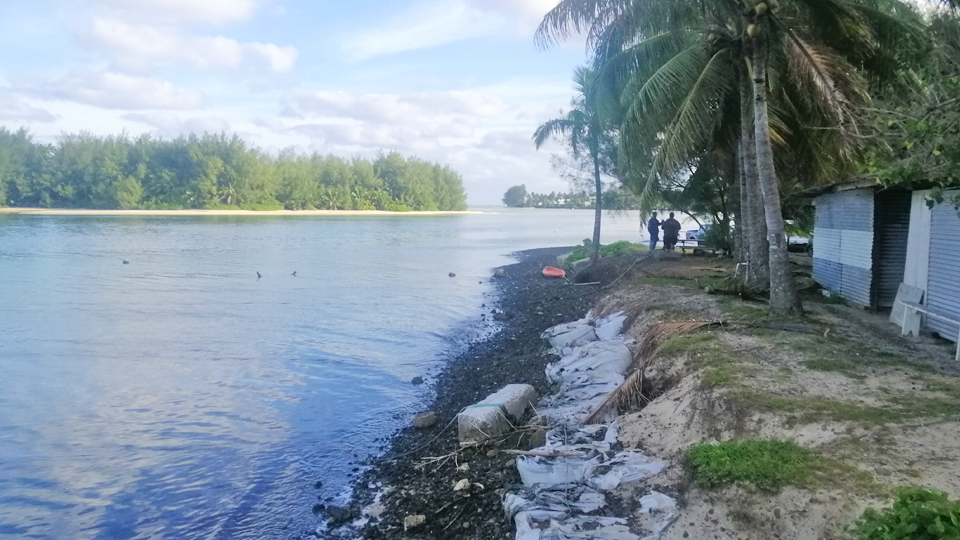
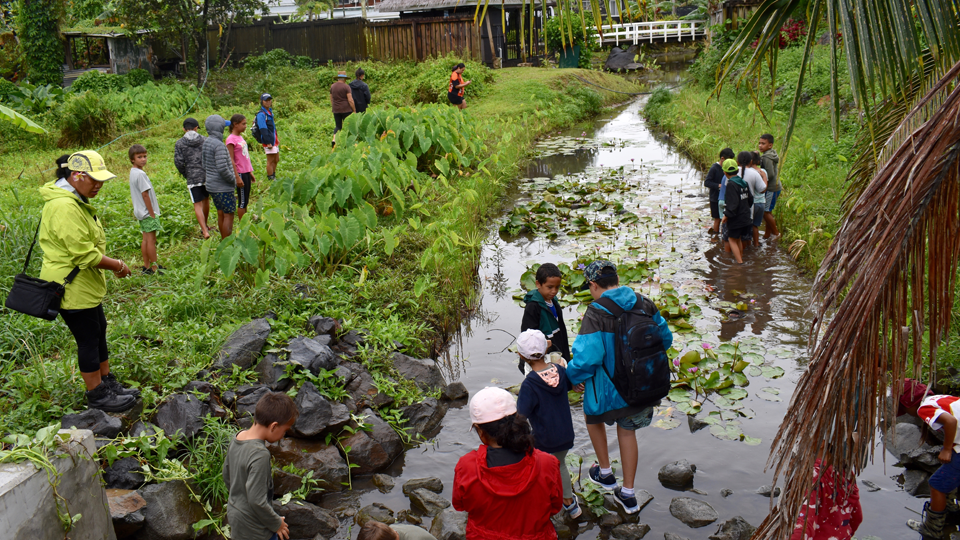
Climate Change Cook Islands invited Kelvin Passfield to guide students from the Pa Enua Tokerau (Northern Group islands) on a site visit to the geotextile sand container (GSC) wall constructed in Avana in 2021. This educational effort introduced students to alternative, innovative coastal protection methods highly relevant to their home islands.

Purpose
The goal is to trial this geotextile technology in a northern atoll setting, allowing the community to witness its benefits firsthand. If successful, it may serve as a low-cost, sustainable model for other northern islands addressing the growing threat of climate change and sea level rise.
Highlights
The GSC wall serves as a practical solution particularly suited to the low-lying coral and sandy environments of the northern atolls. Unlike the rocky southern islands, the north lacks the volcanic materials required for conventional seawalls. The GSC system is designed to utilise the readily available abundance of sand.
These strong, sand-filled fabric tubes are strategically placed to reduce wave energy and limit coastal erosion. The system is both cost-effective and blends more effectively with the natural environment than concrete or rock barriers.
Image gallery