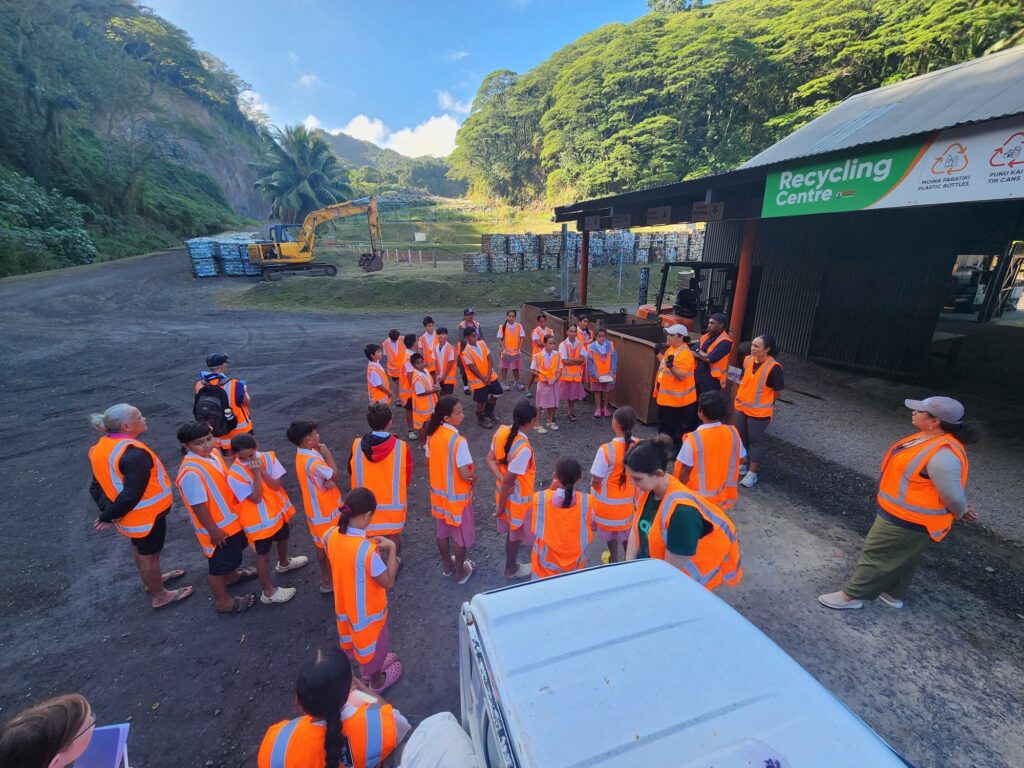
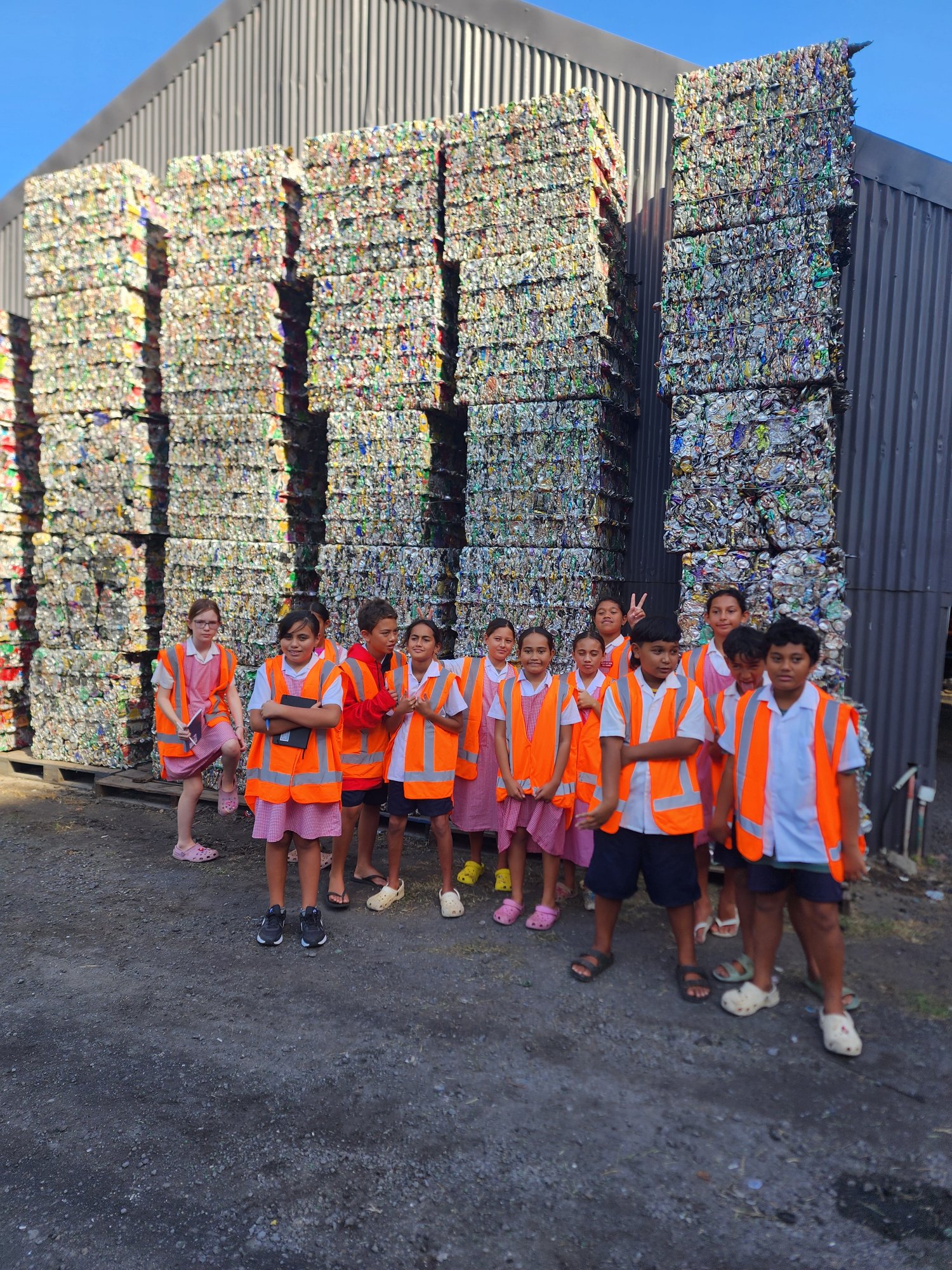
Photo: Te Ipukarea Society representatives took the Grade 5 and 6 students from Apii Takitumu to the Rarotonga landfill on Wednesday.
As Te Ipukarea Society (TIS) marks 30 years of environmental stewardship in the Cook Islands this week, one thing remains clear: the work must continue.
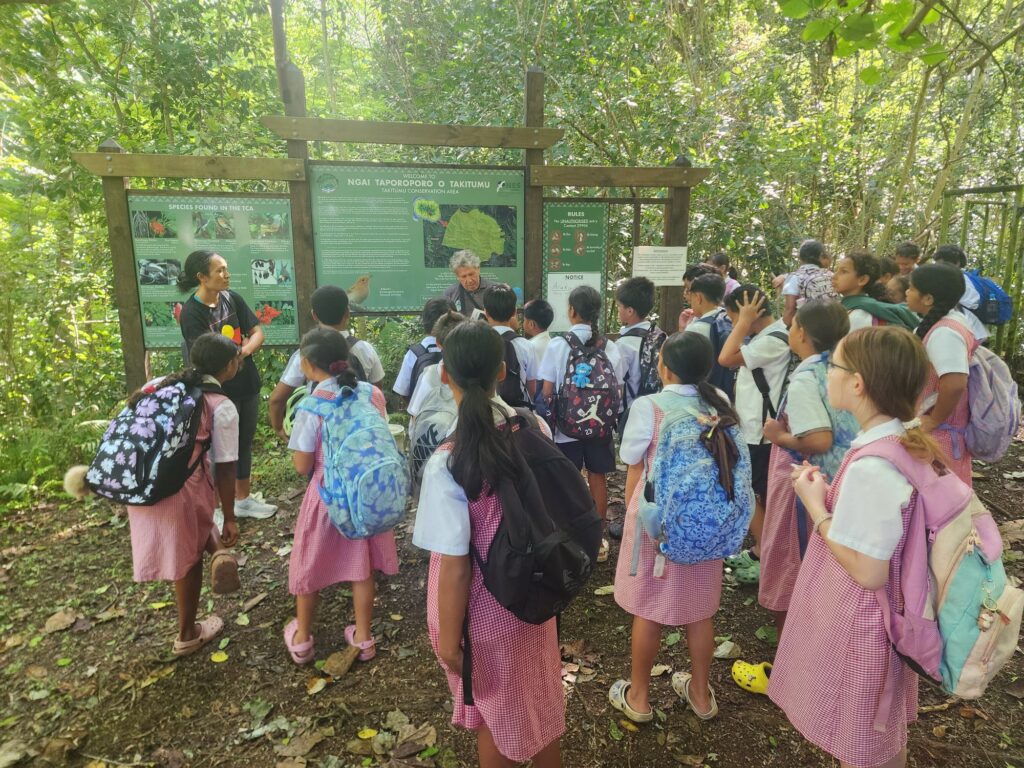
That message was brought to life when TIS representatives took the Grade 5 and 6 students from Apii Takitumu to two sites that offered very different lessons on Wednesday, June 17. First, to the Rarotonga landfill, and then to the Takitumu Conservation Area (TCA). Before heading out, students joined an interactive session on waste management, where they learned about refusing, reducing, recycling and repurposing waste, as well as a briefing on the biodiversity protected within the TCA.
At the landfill, students saw firsthand the scale of the island’s waste challenge. They learned that while the workers at the landfill are doing their best to sort and manage incoming rubbish, the volume of waste coming in has become more than they can reasonably handle. The visit also highlighted a major problem: too much rubbish is still arriving poorly separated, showing how much more work is needed in homes, businesses and the tourism sector to properly sort waste before it reaches the landfill.
For many of the children, the visit was an eye-opening and sobering experience. One student asked, “Where does all this rubbish come from?” In that moment, the students were able to see the direct link between waste produced at home and in other areas such as businesses, to the growing volume of rubbish ending up at the landfill.
The contrast at the Takitumu Conservation Area was striking. Surrounded by native forest and birdsong, students were able to experience the beauty and see the importance of conservation in action. They spotted the endemic kakerori (Rarotonga Monarch birds) and learned more about the rich biodiversity that survives in this special place because of ongoing protection and community care. The visit reminded students that environmental action is not only about dealing with damage, but also about protecting what’s already there.
This kind of outreach reflects the heart of TIS’s work over the past three decades. Founded during a time when environmental priorities were being sidelined, TIS emerged as the Cook Islands’ first environmental NGO to research, educate, and speak up when development placed nature at risk. Over the years, it has grown into an independent and respected voice for conservation at a national, regional and global level, while remaining committed to community education and advocacy.
As TIS celebrates 30 years, it does so by reflecting on past environmental efforts but also by investing in the next generation. Its legacy and ongoing work includes campaigns to protect Suwarrow, opposition to destructive fishing practices, promotion of sustainable tourism, advocacy for improved waste management, and raising awareness of the risks posed by deep seabed mining.
Director of TIS, Alanna Smith remarked that, “Those risks remain especially urgent today.
Deep seabed mining is too often presented as ‘development’ or ‘opportunity’, but development cannot be considered meaningful or sustainable if it comes at the expense of deep-sea ecosystems we barely understand, or potential long term environmental risks to island communities.
Development decisions about our future must have the holistic lens of considering environmental, cultural, community and economic perspectives, rather than being shaped by the economic pillar alone.”
Thirty years on, Te Ipukarea Society continues to carry that message into schools, communities, public forums and national, regional and international conversations: caring for the environment is not separate from progress, it is the foundation of it. And if this week’s visit with Apii Takitumu students showed anything, it is that the next generation is eager to learn and question, in preparation to lead.
If any other schools would like to take part in similar excursions, contact the friendly team at Te Ipukarea Society in Avarua.