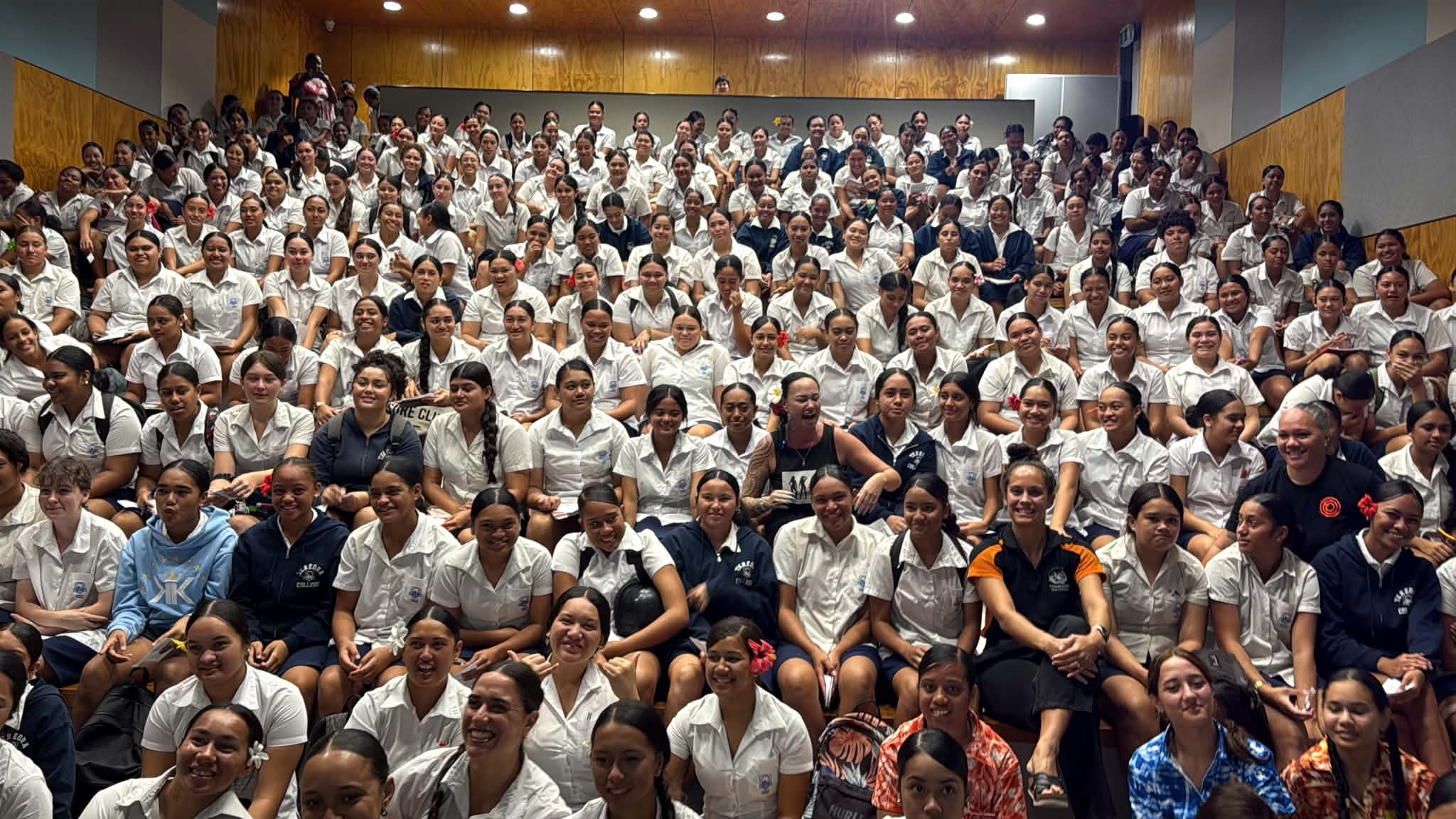
Photo: Local female students participate in an engaging session on women’s health, menstrual wellbeing and sustainable menstrual products
Three hundred plus young women at Tereora College recently took part in an interactive menstrual health awareness session delivered through the collaborative efforts of Te Ipukarea Society, Cook Islands Family Welfare Association (CIFWA) and RedPack. The session aimed to increase understanding of the menstrual cycle while introducing students to sustainable and affordable reusable feminine hygiene options.
A key focus of the session was to share more on reusable feminine hygiene products available today, including reusable pads, menstrual cups, and period underwear. These products provide a practical alternative to disposable hygiene waste while offering significant environmental and financial benefits.
Many conventional menstrual products contain plastic and are designed for single use, contributing to the growing volume of waste entering local landfills. By switching to reusable alternatives, women can significantly reduce the amount of menstrual waste generated over their lifetime. It is estimated that one woman can use and dispose of more than 11,000 single-use menstrual products throughout her life. Reusable options such as period underwear, menstrual cups, and reusable pads offer a sustainable solution to this growing waste stream.
The financial benefits are equally important. Families can spend considerable amounts on disposable menstrual products each year, particularly in the Pa Enua where access and transportation costs can increase prices. Estimates include, one female can spend around $9800 over her life on disposable menstrual products. Reusable products do require an initial investment but can save users money over time, making them a cost-effective option for managing monthly periods.
The topic of menstruation was also discussed as being a natural and healthy part of life for girls and women. This topic however still remains one that many still find uncomfortable to discuss. This was also a key part of the presentation, to work on breaking down these very stigmas through education and encouraging open conversations about periods, women’s health, and the changes that occur during adolescence.
From this program students are able to trial a free pair of reusable period underwear. Guidance on how to properly use and care for these reusable products were also discussed, including correct washing and storage practices to help extend the lifespan of these products.
A big meitaki ma‘ata to our major programme sponsors, the New Zealand High Commission and Redpack, for making it possible for participating women and girls to trial reusable period underwear at no cost. Their support is helping to reduce barriers to accessing sustainable menstrual products while encouraging more environmentally friendly choices.
We also extend our sincere thanks to the Cook Islands Family Welfare Association (CIFWA) Humanitarian Programme for sharing their expertise and facilitating valuable discussions on women’s health. Finally, we acknowledge Days for Girls, whose pioneering work has been instrumental in advancing menstrual health education and promoting reusable feminine hygiene products for women and girls around the world.
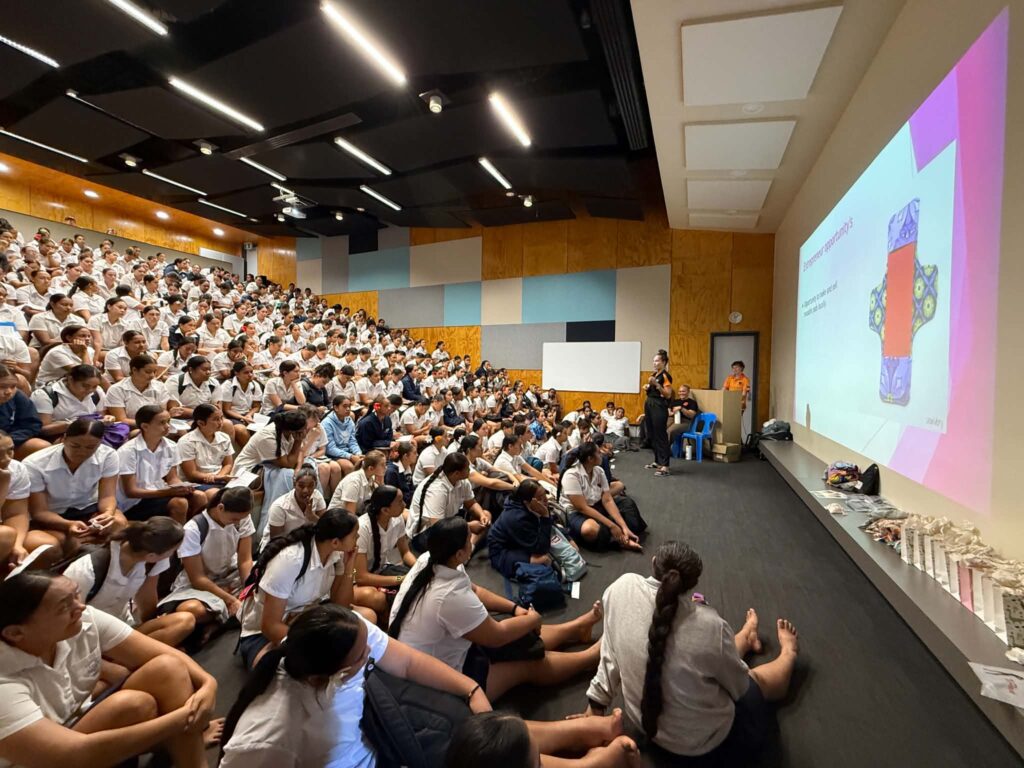
Photo: More then 300 Tereora Students learn more about practical ways to reduce single use disposable feminine hygiene waste.