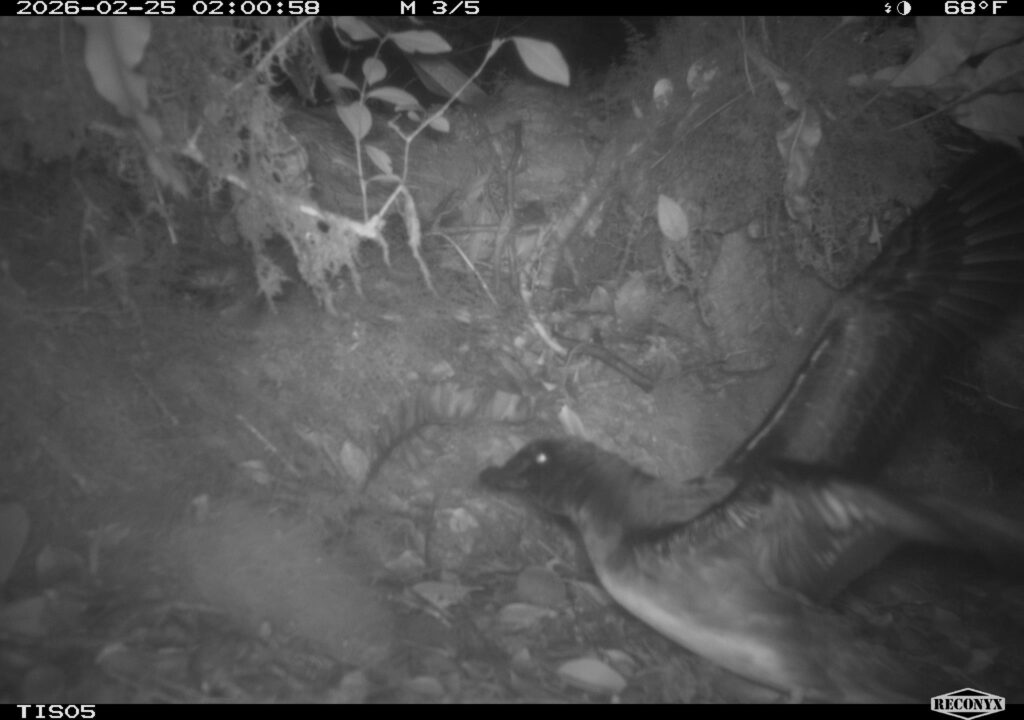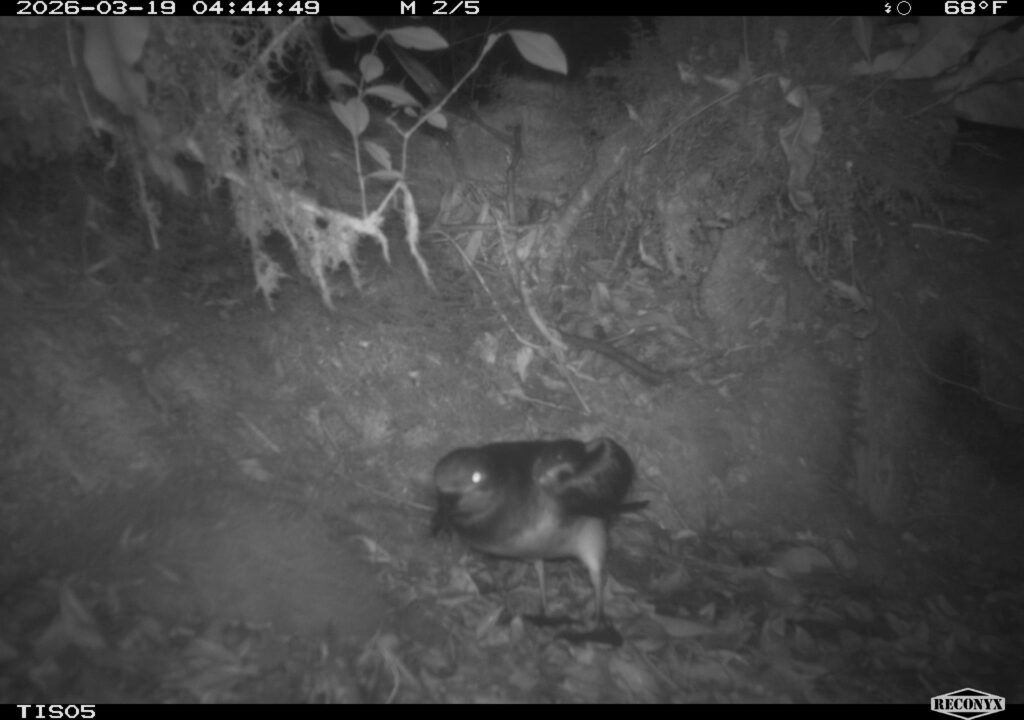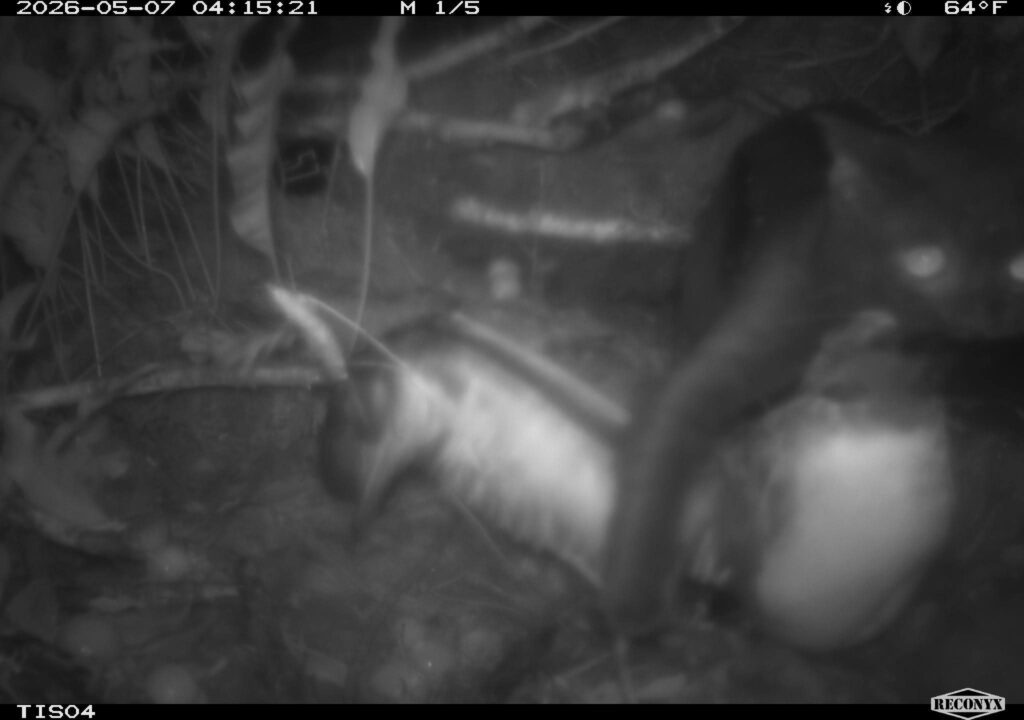
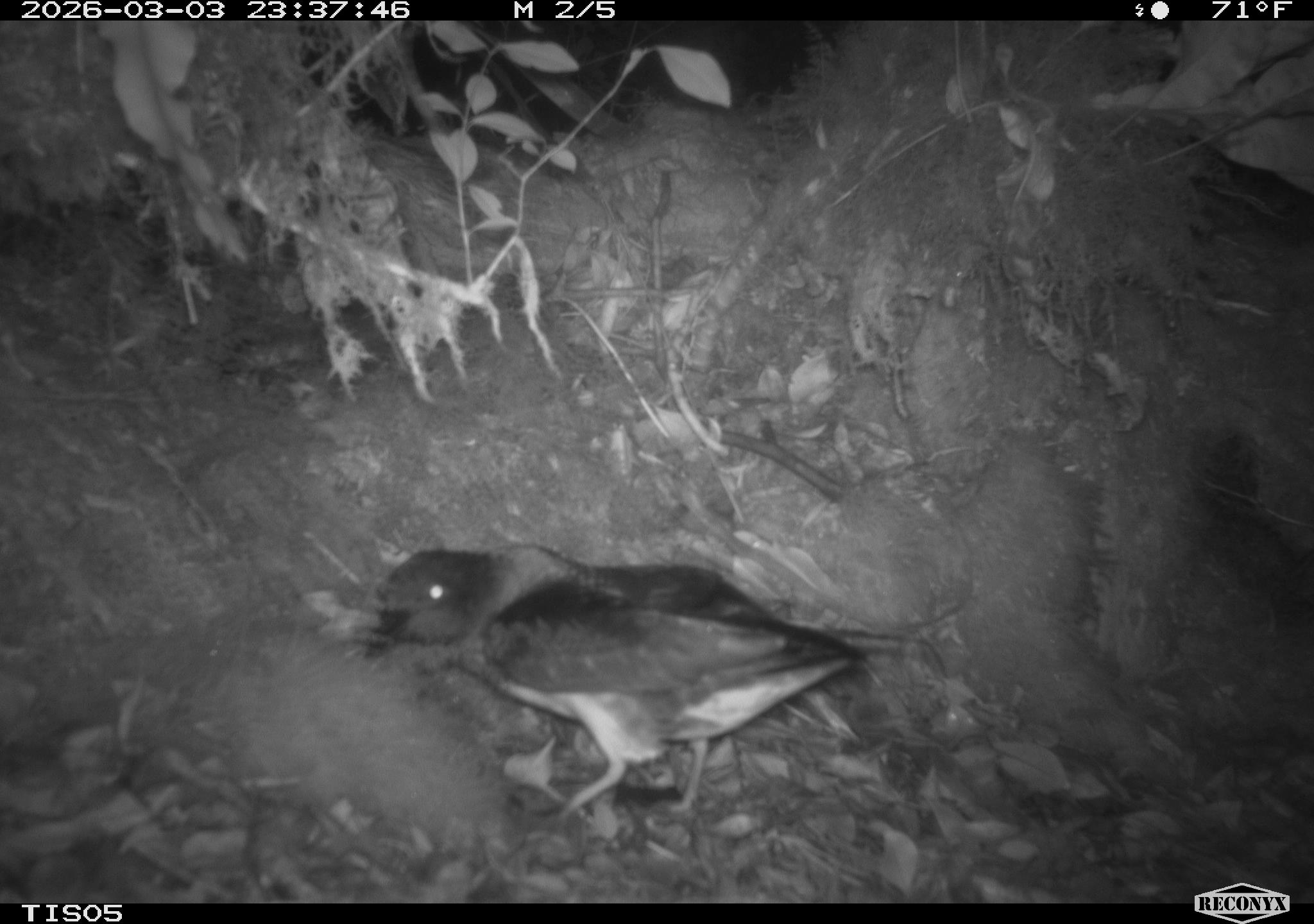
Photo: Ground nesting Tahiti petrel (seabird) nesting within the cloud forest ecosystem of the Takuvaine Valley area
Seabirds are among the world’s greatest travellers, spending much of their lives soaring across vast ocean areas. Beyond their impressive journeys, seabirds serve as important indicators of ocean health. Because these seabirds feed on small fish and squid, changes in seabird populations can provide early warning signs of shifts in fish abundance, pollution levels, and changing climate conditions. Seabirds also play a vital role on land during their nesting seasons. For instance, nutrients gathered while feeding at sea are returned to island ecosystems during their nesting periods via their guano (bird poop), enriching soils, supporting native plant growth, and strengthening the natural water catchment areas that provide us with freshwater to survive.
Several seabird species can be found in the Cook Islands, including the Kōtā‘a – Frigate Bird, Tavake – Red Tailed Tropicbird, and Kākaia – White Tern. In addition, the petrel seabird known on Rarotonga as the Kōputu, has recently received increased attention as local researchers work to better understand its breeding and nesting behaviour within Rarotonga’s unique mountain cloud forest.
The cloud forest ecosystem, located approximately 400 meters above sea level, covers only 3% of Rarotonga’s forested area, and is home to many of the island’s rarest native and endemic plants and animals. Of those rare animals found here, this includes nesting petrels who create burrows in the soft soil under the old Kaiatea trees to raise their young.
Petrels are renowned for their loyalty to their nesting grounds, returning to their same burrow year after year and forming life long bonds with one breeding partner. These breeding behaviours make them relatively easy to monitor over time, but also leave them vulnerable to threats such as predation by feral cats within the cloud forest ecosystem.
Recently, conservation monitoring equipment that had been recording the nesting activity of a breeding pair of Tahiti petrels for more than a year captured the unfortunate predation of what was one of the adult birds caught by a feral cat. The incident occurred within the cloud forest zone, well above the residential areas where cats should normally be found. Cats are not native to our islands, and certainly not to these sensitive montane ecosystems. Petrel birds have evolved in the absence of mammalian predators, which is why they continue to nest on the ground in burrows. As a result, they have now become vulnerable to introduced predators of cats and even dogs, which can have a significant impact on breeding success and long-term population survival.
Ultimately, the presence of feral cats in these sensitive ecosystems is a human-caused problem. The abandonment of unwanted kittens near mountain foothills or uncared for cats, not only compromises the welfare of the cats themselves but also places significant pressure on native wildlife, including vulnerable ground-nesting seabirds.
This is why responsible pet ownership is so important, and our small island is so fortunate to have local support services to help us achieve this. Paws n Claws Cat Sanctuary in Matavera take in abandoned cats and kittens whilst also offering educational programmes around the responsibilities of owning a cat. Paws in Claws in conjunction with Te Are Manu also offer desexing programs. Local volunteer vets Te Are Manu have suggested desexing donations for male cats at $20; female cats at $40; female and male dogs $60. Though any donation families can afford are also greatly appreciated. The desexing of cats and dogs not only reduce the growth of these populations but also significantly changes hormone levels which can reduce several behaviours that contribute to roaming and impacting native wildlife. Keeping pet cats indoors and ensuring they are well fed can further reduce their impact on native wildlife by discouraging hunting behaviour and preventing them from roaming into sensitive habitats where threatened seabirds breed.