
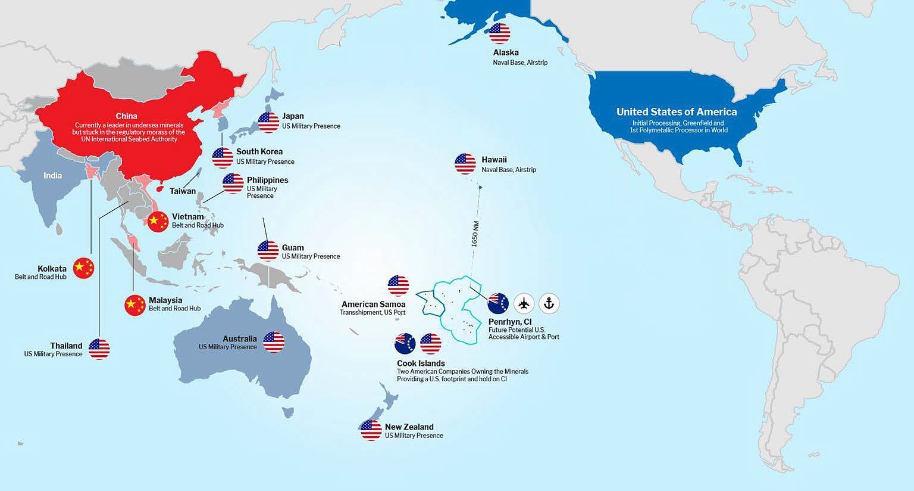
Figure 1: Map showing the strategic geographic approach to mining and processing polymetallic nodules
Source: American Ocean Minerals Corporation investor presentation available here.
Odyssey Marine Exploration has filed an application for a merger with American Ocean Minerals Limited (AOML). The publicly available information on the merger also links the transaction to the exploration licence areas held by CIC Limited and Moana Minerals Limited, two companies operating in the Cook Islands. The proposed merger matters for the people of the Cook Islands because it advances a commercial seabed minerals plan on accelerated timelines while our country is still in the exploration phase.
The materials filed with the United States Securities and Exchange Commission (SEC) describe a combined company valued at about US$1 billion, supported by more than US$230 million of equity capital.
SBMA has stated publicly that exploration is not mining, and that no commercial extraction can happen without separate approvals — including environmental decisions led through the National Environment Service (NES). They are adamant that the decision to allow mining, or not, has not been made.
Despite this, the merger’s public filings describe an ‘accelerated path to production’ and include estimated timeframes to a “harvesting” licence/permit: 18–26 months for Ocean Minerals (Moana Minerals) and 20–28 months for CIC Ltd. This raises a simple question: if we are still gathering baseline science to inform decision making, why are company timelines already counting down to mining permits?
When overseas investors are told the Cook Islands offers the quickest route to deep‑sea mining, it can create momentum and expectations that run ahead of our own public decision‑making process. This matters because any long‑term risk that is environmental, financial, or democratic in nature would be carried by all Cook Islanders.
The filings also outline a supply-chain plan that reaches beyond our waters: mining nodules from the Cook Islands and other deep‑ocean areas, moving them via a proposed transshipment port in American Samoa, and processing them on the US Gulf Coast. This is shown in the publicly available map (figure 1) highlighting the strategic geographic approach to mining and processing polymetallic nodules. This points to where the commercial value chain is intended to sit and highlights why Cook Islanders need clarity on perceived benefits, control, and risk.
This merger also lands in a context where government actions can be seen in practice as preparing the legal machinery for mining. The Environment (Seabed Minerals Activities) Regulations 2023 set out the environmental approvals pathway for exploration and mining activities. In October 2024, the Government brought into force the Seabed Minerals (Minerals Harvesting and Other Mining) Regulations. These are detailed rules for how a mining license would be applied for, publicly notified, and approved, including formal consultation steps involving NES.
TIS acknowledges that having regulations in place is not the same as a final decision to mine. However, when exploitation rules are already in force, and when a foreign merger is using Cook Islands licenses and regulatory readiness as a selling point to investors, the people of the Cook Islands deserve clear answers — quickly and in plain language.
The motivation is explicitly geopolitical. A US Executive Order on critical minerals states: “A strong America cannot be dependent on imports from foreign adversaries for the critical minerals that are increasingly necessary to maintain our economic and military strength in the 21st century.” How does this reconcile with the Cook Islands signing the Blue Pacific Ocean of Peace alongside other Pacific leaders in September 2025? Cook Islanders deserve an honest discussion about what it means when our seabed is positioned inside another country’s security and supply‑chain strategyRecent public letters and commentary in Cook Islands News have also raised questions about ownership, control, and whether significant corporate changes (such as this merger) should trigger Cook Islands approval requirements. These are governance questions that deserve public responses.
TIS is calling on the Cook Islands Government to explain what the merger means for Cook Islands‑licensed exploration companies, what Cook Islands approval is required for changes in ownership or control and have those processes been triggered.
A merged company is a new entity. Therefore, they will need to go through background checks to determine if they are fit and proper to even operate here. Only if accepted, can they begin the process of applying for a 5-year exploration license.
If mining is being planned on 18–28-month timelines in public corporate documents, and investors are being told that the seabed is ready for mining then Cook Islanders must be able to see what is proposed, who benefits, who carries the risk, and who is making the decisions.
The ocean is our identity, our food basket, and our future. Decisions impacting the Cook Islands must never again be made by foreign governments, investors or corporations. We, the Cook Islands people, must retain the power to determine our future.